
Nutrafol is the most marketing-successful hair supplement on the market. It also costs $88/month — making it one of the most expensive recurring supplement costs you can add to your routine. For many users, that price is the primary reason to look elsewhere.
The good news: there are legitimate alternatives with comparable clinical evidence at meaningfully lower price points.
Quick Answer
Viviscal ($40/mo) is the best Nutrafol alternative — comparable clinical evidence at roughly half the cost. For postpartum specifically, Baby Blues is formulated for that context. For budget shoppers, Nature's Bounty Biotin at $12/mo is available but has much weaker evidence.
Why Do People Look for Nutrafol Alternatives?
Cost is the dominant reason. At $88/month, Nutrafol costs more than a finasteride + minoxidil regimen through most telehealth platforms. For users with mild thinning who are considering supplements as a lower-commitment entry point, the price can feel disproportionate to the expected effect size.
Results are slow and modest. Like all supplements, Nutrafol requires 3-6 months of consistent use before any improvement is visible. The magnitude of improvement in clinical trials — while statistically significant — is not dramatic. Users who start expecting Nutrafol to reverse significant hair loss are often disappointed.
Side effects and formula concerns. Nutrafol contains saw palmetto, which has mild anti-androgenic properties. A small number of users report side effects similar to finasteride (libido changes, fatigue). Nutrafol also contains multiple active compounds, making it harder to identify which ingredient might be responsible for any adverse effect.
Wanting a different mechanism. Nutrafol's formula focuses on adaptogens, stress reduction, and DHT. Some users prefer marine collagen approaches (Viviscal), organic formulations, or targeted single-ingredient supplements.
The 7 Best Nutrafol Alternatives
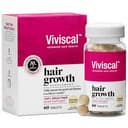
Viviscal
Best For
Best overall alternative
Works In
3-6 months
Price
$39.99
as of Sep 13
Pros
- ✓Multiple published RCTs (men and women) showing more terminal hairs vs. placebo
- ✓Roughly half the cost of Nutrafol ($40 vs $88)
- ✓Marine-collagen mechanism (AminoMar), distinct from DHT/adaptogen formulas
Cons
- ✗Contains shellfish-derived ingredients (not for shellfish allergy)
- ✗Requires twice-daily dosing
- ✗Not a fix for advanced androgenetic loss on its own

Baby Blues Hair Vitamins
Best For
Postpartum hair loss
Works In
3-6 months
Price
$39.00
as of Sep 13
Pros
- ✓Formulated for postpartum shedding — targets the actual driver, not DHT
- ✓Marketed as breastfeeding-safe, with no saw palmetto or ashwagandha (both in Nutrafol's standard formulas)
- ✓Replenishes pregnancy-depleted folate, B12, zinc, and collagen (no iron, so keep your prenatal)
Cons
- ✗Only relevant to postpartum telogen effluvium, not general thinning
- ✗No dedicated placebo-controlled trial of the finished formula
- ✗Won't help androgenetic (pattern) hair loss
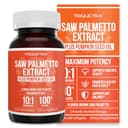
Saw Palmetto Extract
Best For
Natural DHT blocker
Works In
3-6 months
Price
$31.58
as of Sep 13
Pros
- ✓Natural 5-alpha reductase inhibitor — the most direct budget swap for Nutrafol's DHT angle
- ✓In a 2012 two-year comparison (Rossi), 38% of men with androgenetic alopecia improved
- ✓Much milder side-effect profile than finasteride
Cons
- ✗Weaker than finasteride (38% vs 68% in that trial)
- ✗No adaptogen or anti-inflammatory support like Nutrafol
- ✗Addresses only the DHT pathway, not nutrition or stress
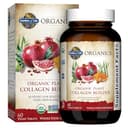
Garden of Life Organics
Best For
Organic, whole-food preference
Works In
3-6 months (indirect nutritional support)
Price
$25.89
as of Sep 13
Pros
- ✓USDA organic and Non-GMO Project verified
- ✓Whole-food-sourced biotin, vitamin C, folate, and B12 rather than isolated synthetics
- ✓Reasonable choice if deficiency-driven shedding is suspected
Cons
- ✗No dedicated RCT on hair outcomes for this specific formula
- ✗No DHT- or stress-targeting ingredients
- ✗Broad nutritional support, not a targeted hair treatment
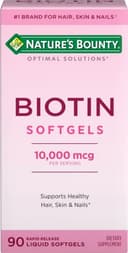
Nature's Bounty Biotin
Best For
Lowest monthly cost
Works In
Unclear if you are not deficient
Price
$12.29
as of Sep 13
Pros
- ✓Cheapest widely available option by a wide margin
- ✓Genuinely helps if you have a confirmed biotin deficiency
- ✓Low side-effect profile at standard doses
Cons
- ✗Weak evidence for hair growth in people without a deficiency
- ✗True biotin deficiency is uncommon outside specific medical conditions
- ✗High-dose biotin can interfere with thyroid and troponin lab tests
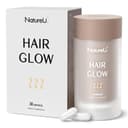
NatureU Hair Growth
Best For
Broadest blend, unverified doses
Works In
Unknown — formula untested
Price
$51.87
as of Sep 13
Pros
- ✓Covers more relevant ground than a single-ingredient product: saw palmetto, vitamin D3 and zinc
- ✓Saw palmetto is the same mild DHT-blocking ingredient Nutrafol uses
- ✓Vitamin D and zinc genuinely matter for hair if you are deficient in them
Cons
- ✗No published doses, so no ingredient can be checked against the amounts used in trials
- ✗The finished formula has never been tested; no trial supports it as a product
- ✗"LushMaster™ Delivery Technology" is a trademark, not evidence — no data shows improved absorption
The ranked cards above are the quick view. The sections below explain what the evidence actually shows for each — and where the seventh option, minoxidil, fits for anyone who wants meaningful regrowth rather than a supplement.
1. Viviscal — Best Overall Nutrafol Alternative
Viviscal is Nutrafol's closest peer in terms of clinical evidence and market credibility. The key difference: they work through entirely different mechanisms.
Nutrafol uses adaptogens (ashwagandha), saw palmetto, and anti-inflammatory botanicals to address multiple hair loss pathways — stress, DHT, inflammation. Viviscal uses AminoMar, a proprietary marine protein complex derived from shark cartilage and oyster extract, focused on nutritional support and follicle nourishment from the inside.
Clinical evidence: Viviscal has multiple published randomized controlled trials. A small 2012 study in the Journal of Clinical and Aesthetic Dermatology (15 women) showed significantly more terminal hairs vs. placebo at 6 months in women with thinning hair, and a 3-month trial in 60 women also found less shedding. A 2016 RCT in men reported significant increases in hair count at 6 months and less shedding at 3 and 6 months. The evidence quality is comparable to Nutrafol — both rely primarily on company-funded small trials.
The value case: At ~$40/month, Viviscal costs less than half of Nutrafol. For most users who don't have a specific reason to prefer Nutrafol's stress/DHT approach, Viviscal is the right starting point. Viviscal sells distinct men's and women's formulas (same AminoMar core) — pick whichever matches:
2. Baby Blues Hair Vitamins — Best for Postpartum Hair Loss
Baby Blues is formulated specifically for postpartum and breastfeeding women — a context where Nutrafol's standard formula (containing saw palmetto and ashwagandha) carries more uncertainty.
Postpartum hair loss (telogen effluvium) is driven by the hormonal shift after delivery rather than DHT or chronic stress — meaning Nutrafol's primary mechanisms are largely irrelevant for postpartum shedding. Baby Blues focuses on replenishing the specific nutritional deficits that pregnancy and nursing create: folate, B12, zinc, and collagen (it contains no iron, so keep taking an iron-containing prenatal if you need one).
For postpartum users specifically, this more targeted approach is more logically suited to the underlying cause. And unlike Nutrafol's standard formula, Baby Blues is marketed as safe while breastfeeding (Nutrafol's separate Postpartum formula also leaves out saw palmetto and ashwagandha).
Who it's for: New mothers experiencing postpartum shedding at 2-5 months postpartum.
3. Saw Palmetto Supplement — Best Natural DHT Blocker
One of Nutrafol's primary active ingredients is saw palmetto — a natural 5-alpha reductase inhibitor that partially blocks the conversion of testosterone to DHT. If the reason you're taking Nutrafol is primarily for its mild DHT-blocking properties, saw palmetto extract alone is available for $10-15/month.
The evidence: in a two-year comparison of 100 men (Rossi 2012), 38% improved on saw palmetto 320 mg a day — versus 68% on finasteride, but with a milder side-effect profile.
Saw palmetto alone won't give you Nutrafol's full adaptogen and anti-inflammatory support, but it's the most direct budget alternative if DHT is your primary concern.
Read our full saw palmetto guide →
4. Garden of Life Organics — Best Organic/Whole Food Option
Garden of Life Organics Hair, Skin & Nails is a whole-food multivitamin approach to hair support — USDA organic, Non-GMO Project verified, and made from real food sources rather than isolated synthetic nutrients.
The formula includes biotin, vitamin C, folate, and vitamin B12 from fermented organic whole foods, plus a blend of organic fruits and vegetables. It's not targeting the same specific mechanisms as Nutrafol (no saw palmetto, no adaptogens), but provides a broad nutritional foundation that addresses deficiency-based hair loss.
Who it's for: People who prioritize organic certification, clean label sourcing, and whole-food vitamins over a more pharmaceutical supplement approach.
Cost: ~$35/month.
5. Nature's Bounty Biotin — Best Budget Option
At around $12/month, Nature's Bounty Biotin 10,000mcg is the most affordable widely available hair supplement option. The honest caveat: evidence for biotin supplementation in people without biotin deficiency is very weak.
Biotin is a B vitamin involved in keratin synthesis. Biotin deficiency does cause hair loss — but true biotin deficiency is rare in people with normal diets. The supplement industry has heavily marketed high-dose biotin for hair, but peer-reviewed evidence for supraphysiologic biotin doses improving hair in non-deficient individuals is not strong.
What biotin is useful for: people with confirmed deficiency (testing available through a doctor), people on restricted diets, and as part of a broader multivitamin approach.
Best case for choosing it: You want the lowest possible monthly cost and have realistic expectations about the magnitude of effect.
6. NatureU Hair Growth — Broadest Blend, Least Verifiable
NatureU is the multi-ingredient option on this list: saw palmetto, vitamin D3, zinc, niacinamide, biotin, keratin peptide and a couple of botanical extracts, sold on a trademarked "LushMaster™ Delivery Technology."
What's reasonable about it. The ingredient selection is not silly. Saw palmetto is the same mild DHT blocker Nutrafol uses. Vitamin D and zinc are two of the deficiencies that genuinely drive shedding, so a blend covering both is aiming at real mechanisms rather than inventing new ones.
What's missing is the part that matters. The doses aren't published. Every ingredient here sounds credible because of trials run at specific amounts, and without a label you cannot tell whether this product delivers those amounts or a token sprinkle. The finished formula has never been tested as a formula — a limitation it shares with most of this category, but one Viviscal does not have. And the delivery trademark is a brand asset rather than a finding: naming a delivery system does not demonstrate that more of anything reaches your bloodstream, and no data is offered showing that it does.
Where it lands. Ranked last among the supplements here, below biotin — not because the blend is worse conceived, but because biotin at least tells you what you're getting and when it helps. If the DHT angle is what appeals, standalone saw palmetto covers this blend's best-supported ingredient at a known dose for around $12/month. If it's the vitamin D and zinc, a blood test answers whether you need either, which no blend can.
7. Minoxidil — Best for Meaningful Efficacy
This is a different category than the others: minoxidil (Rogaine, Kirkland) is an FDA-approved treatment, not a supplement. But it belongs in this list because for users taking Nutrafol hoping for meaningful hair regrowth, minoxidil has substantially stronger and more consistent clinical evidence.
If your hair loss is significant enough that you're spending $88/month on Nutrafol hoping for results, the evidence suggests you will get better outcomes from minoxidil at $15-30/month. The tradeoff: twice-daily application routine (or prescription for oral) versus once-daily supplement.
Nutrafol and minoxidil can also be used together — there is no contraindication, and the approaches are complementary.
Read our best minoxidil rankings →
How Do They Compare?
| Alternative | Monthly Cost | Evidence Level | Mechanism | Best For |
|---|---|---|---|---|
| Viviscal | ~$40 | Strong (for a supplement) | Marine collagen | Most people |
| Baby Blues | ~$35 | Moderate | Postpartum nutrition | New mothers |
| Saw Palmetto | ~$12 | Moderate | Mild DHT blocker | Mild androgenetic loss |
| Garden of Life | ~$35 | Moderate (indirect) | Whole food nutrients | Organic preference |
| Nature's Bounty Biotin | ~$12 | Weak (unless deficient) | Biotin / B vitamin | Budget shoppers |
| NatureU | see listing | Weak (untested formula) | Multi-ingredient blend | Broad coverage, if you accept the unknowns |
| Minoxidil | ~$15-30 | Strong (FDA-approved) | Growth stimulator | Meaningful efficacy |
Is There a Generic Nutrafol? Dupes at Walmart, CVS & Amazon
One of the most common searches is for a "generic Nutrafol" or a cheaper dupe at Walmart, CVS, or on Amazon. Here's the honest answer.
There is no true generic Nutrafol. Unlike a prescription drug — where generic finasteride is chemically identical to Propecia — Nutrafol is a multi-ingredient supplement built on a proprietary blend. No manufacturer makes an FDA-defined generic equivalent. What you'll find instead are alternatives, not copies.
Store and drugstore "dupes" are mostly biotin blends. Walmart, CVS, and Amazon all stock cheaper hair-growth supplements, but the vast majority are high-dose biotin or generic multivitamin blends with little clinical evidence behind the finished product. They're cheaper because they're not the same thing.
The closest evidence-backed swaps are the ones ranked above: Viviscal for overall value with published trials at roughly half the price, and standalone saw palmetto if you specifically want Nutrafol's mild DHT-blocking ingredient without the rest of the formula. For the lowest possible cost, biotin runs about $12/month — with the caveat that it only helps if you're genuinely deficient.
A caution on Amazon "knockoffs." Unbranded listings marketed as "Nutrafol dupes" often have unverifiable ingredient quality and dosing. Stick to established brands with actual published evidence rather than a cheaper look-alike with a proprietary blend of its own.
The Honest Assessment
No supplement — Nutrafol, Viviscal, or otherwise — should be expected to produce the same results as FDA-approved treatments for androgenetic alopecia. The clinical evidence for supplements is real but modest, and studies are uniformly small and company-funded.
That said, supplements are appropriate for: mild diffuse thinning, nutritional-deficiency-driven shedding, postpartum telogen effluvium, and as adjuncts to prescription treatments. For people in these situations, the alternatives above offer legitimate value at lower cost.
For significant androgenetic hair loss, supplement money is generally better spent on minoxidil and/or finasteride.
Before you treat, test
Not sure what's driving your hair loss?
Before you commit to any supplement on this list, it's worth knowing what's actually driving your shedding. If it's low iron, a thyroid imbalance, or a hormonal shift, no supplement will fix it — you'd spend months and money treating the wrong thing. A blood panel pinpoints the cause, so you know whether a supplement is even the right tool or whether you should be treating something else entirely.
Sources
- Viviscal RCT: Lassus A, Eskelinen E. J Int Med Res. 1992. PMID: 1286738
- Viviscal women RCT: Ablon G. J Clin Aesthet Dermatol. 2012. PMID: 23198010
- Viviscal men RCT: Ablon G. J Cosmet Dermatol. 2016. PMID: 27506633
- Viviscal 3-month women RCT: Ablon G. Dermatol Res Pract. 2015. PMID: 25883641
- Nutrafol clinical study: Ablon G, Kogan S. J Drugs Dermatol. 2018. PMID: 29742189
- Saw palmetto vs finasteride: Rossi A et al. Int J Immunopathol Pharmacol. 2012. PMID: 23298508
- Saw palmetto: Prager N et al. J Altern Complement Med. 2002. PMID: 12006122
- Biotin and hair loss review: Patel DP et al. Skin Appendage Disord. 2017. PMID: 28879195
Our top pick
Viviscal
The best evidence-to-price ratio of any Nutrafol alternative — published trials at roughly half the cost.
See also: